Design Notes
What a Mood Board Actually Does
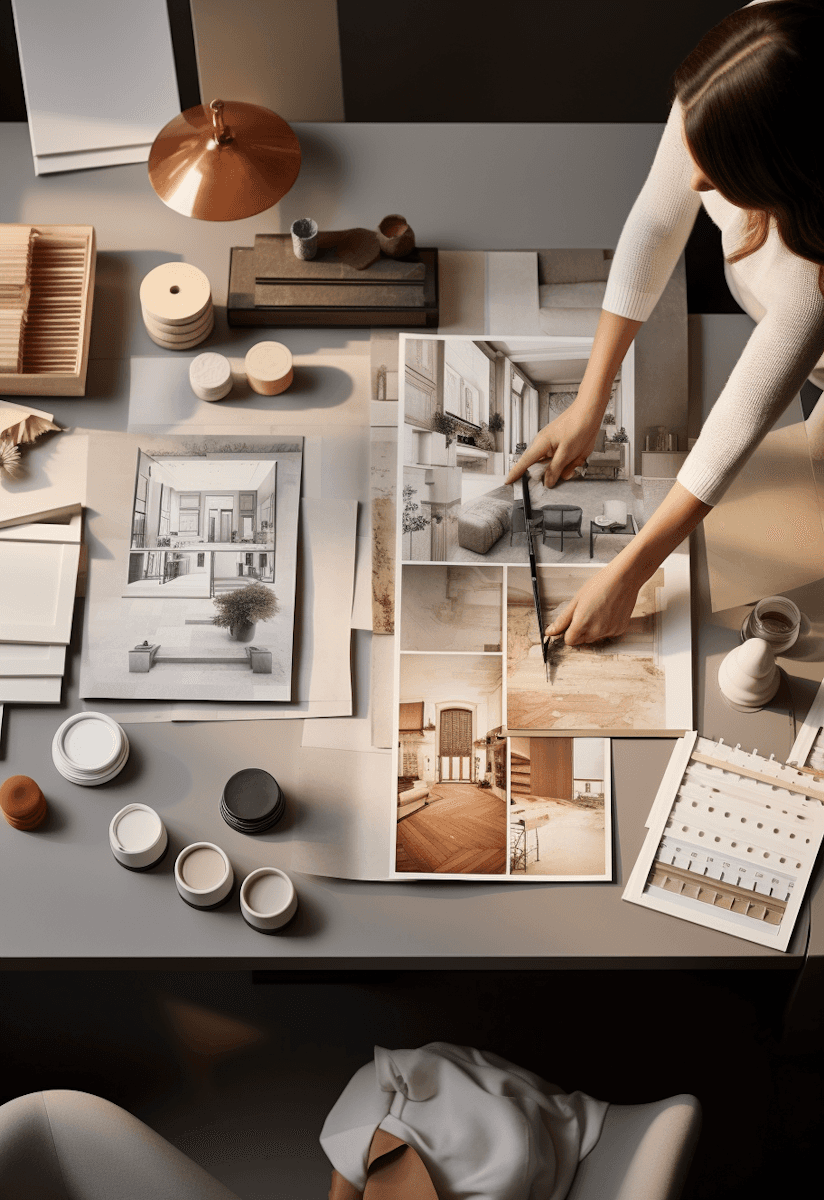

It's not decoration. It's a budget conversation in disguise.
Clients think a mood board is about taste — proof that a soft grey wall and a warm oak floor actually belong in the same room. It rarely works that way in practice. A mood board is a budget conversation wearing the costume of an inspiration board, and once a client sees it that way, the whole process gets easier.
Every image pinned to a board is really a decision about where the money in a project goes. A statement pendant light over the dining table usually means a plainer, quieter set of chairs underneath it — not because the two don't look good together, but because a budget only stretches so far, and a room with two loud choices competing for attention rarely feels as calm as a room with one. A book-matched stone countertop usually means simpler cabinetry, not more elaborate cabinetry, for the same reason.
This becomes clear the first time a client falls in love with three images that, priced out honestly, would consume the entire budget on their own. That's not a failure of the mood board — it's the mood board doing its job. The conversation that follows isn't about taste anymore. It's about which of the three things actually matters enough to build the rest of the room around.
On one recent project, a client arrived with a board built almost entirely around a marble island. Once the full scope was priced, the island survived, but the surrounding cabinetry, the lighting plan, and even the flooring all shifted quieter to make room for it in the budget. The finished kitchen reads as considered, not compromised, specifically because that trade-off got made early and on purpose.
The mistake most first-time clients make is treating a mood board as a finished decision rather than a first draft of priorities. Once it's understood as the second thing rather than the first, the entire back half of a project — the part that actually determines cost — gets easier to navigate, because everyone is negotiating around the same one or two things that actually matter, instead of trying to have all of it at once.